
Jesse Learns Henry's Law: Everybody Out of the Pool!

"Bubbles Equal Trouble"
Jesse the Pool Guy
Chapter 12
By Bob Deakin

Jesse the pool guy learned a new law, one that has taunted him for the past two weeks. Henry’s Law is responsible for raising the pH of a customer’s pool, and Jesse is entrenched in a battle to stop it.
The Kemp family has a saltwater pool with a waterfall and heater, and the water is persistently cloudy. They are also experiencing eye irritation that they never had before. In addition, there is now visible scaling on the waterline.
Jesse has meticulously maintained the pool, chemical levels and equipment. Right now, though, he is struggling to maintain his patience as he looks up Henry’s Law on his phone.
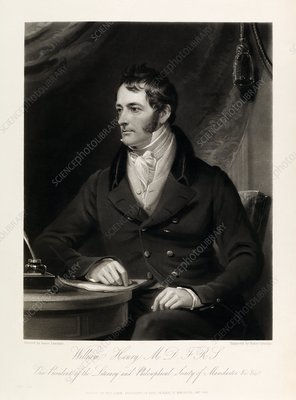
Who is Henry and Who Said He Could Make Laws?
The more water movement you have, the more CO2 escapes, reducing carbonic acid and raising the pH. The primary reason pH increases in salt pools is due to the physical agitation of the water within the salt cell and subsequent bubbling of hydrogen gas.
“Bubbles equal trouble,” Jesse says to himself, impressed with his spontaneous poetry while reading a chemistry article. “Everything is working perfectly but it’s like seawater.”
Water bubbling causes CO2 off-gassing, reducing carbonic acid and leaving basic sodium hydroxide (NaOH) that isn't fully neutralized. The escaping CO2 increases alkalinity, jacking up the pH.
The human eye’s 7.2 pH and your skin’s natural balance do not do well in a pH higher than about 7.8, ruining the pool party. The high pH also reduces the effectiveness of the sanitizer, damages equipment, and fosters algae growth and cloudy water.

Okay Henry, Now I Get It
Henry’s law was formulated by William Henry in 1803. LibreTexts chemistry library provides the definition.
“At a constant temperature, the amount of a given gas that dissolves in a given type and volume of liquid is directly proportional to the partial pressure of that gas in equilibrium with that liquid.”
Orenda Technologies spells it out in simpler terms:
“When CO2 off-gasses, the amount of carbonic acid decreases, so the pH rises. So, aeration itself raises the pH of water because CO2 escapes. If you want to raise the pH without adding any chemicals, just aerate the water to release CO2.”
The mathematical formula of Henry’s law is given by: P ∝ C (or) P = kH.C.

Courtesy of Kansas State University
Acid to the Rescue
Christmas is over, and Florida Januarys can be chilly. The Kemp family likes to swim year-round, so they’ve been running their heater since Thanksgiving. The new waterfall they installed at the end of the summer is working well too.
The combination of both, with the salt cell, however, creates the perfect storm for high pH and ineffective sanitizer. Therefore, Jesse now has a reason to add muriatic acid or sodium bisulfate.
The bisulfate is gentler to handle and less corrosive, but Jesse chooses muriatic acid since it’s stronger and the Kemps are complaining about being able to use the pool this weekend. He doesn’t like handling it, as it will burn holes in whatever it touches, but incorporated properly, it will bring the pH level down.

Our Work Here is Done
Jesse checks the salt generator, heater, and waterfall then balances the chemicals again before adding acid. He proceeds to vacuum then brush vigorously to address the scaling. He will stop by again tomorrow to check everything before the weekend.
Looking forward, he is confident in the potential benefits of using acid in moderation. Microdosing with each visit will help those bloodshot eyes and keep him in line with Henry’s Law.
###


Comments